You may be seeing ice fisherman on parts of Pawtuckaway Lake, but there is still a lot of open water, and that could spell danger for anyone venturing out. Please never go on the ice alone, and always check the thickness before you step on it. Remember, ice thickness can vary from location to location, so always keep checking!

The graphic above has rough minimum measurements you should consult before doing so. However, the U.S. Army Cold Regions Research & Engineering Laboratory in Hanover, NH, offers a “rule of thumb” on ice thickness: “There should be a minimum of six inches of hard ice before individual foot travel, and eight to ten inches of hard ice for snow machine or All-Terrain Vehicle travel.”
Temperatures this season have varied wildly, with snow, rain, thawing and freezing weather creating dangerous conditions on the ice. Ice can be thick, but not strong, because of varying weather conditions. Weak ice is formed when warming trends break down ice, then the slushy surface re-freezes.
The New Hampshire Fish and Game Department has some very helpful tips regarding ice safety and you can read them and watch their vieo by clicking here.
To all our winter sports enthusiasts: Safety first!
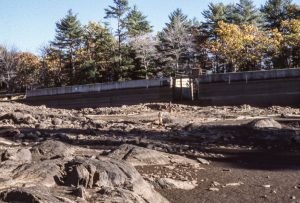 Background: Dolloff Dam is at least 182 years old as of 2024, according to a


 containers, and other litter that accumulates over the months from motorists tossing these items out their windows. This summer one volunteer even found a discarded artificial Christmas tree!
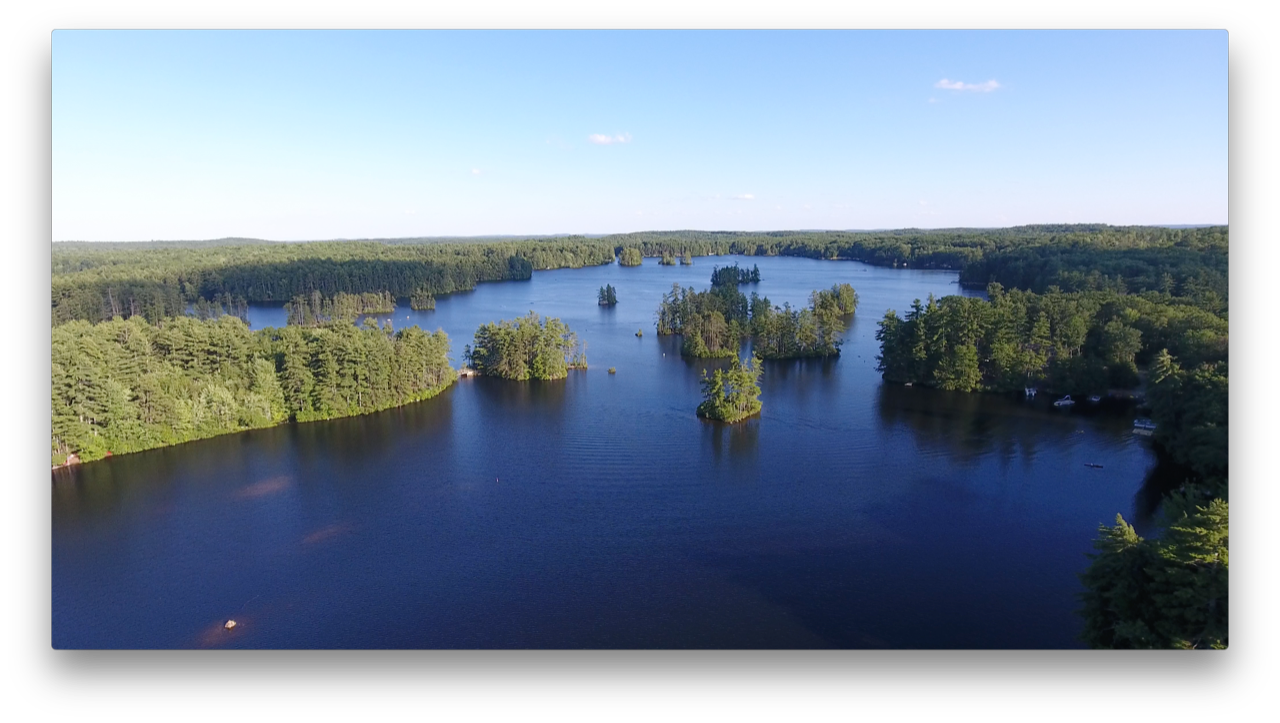

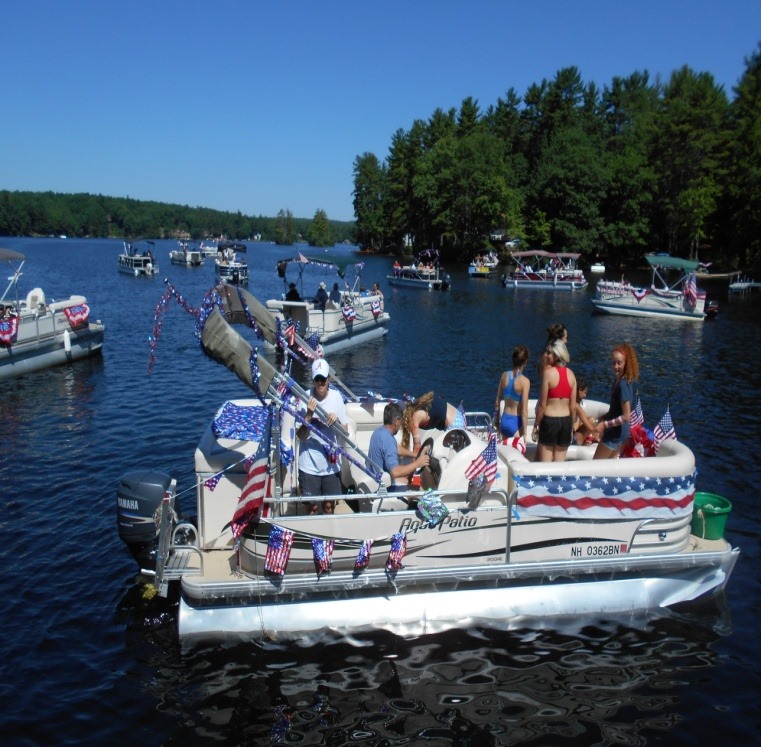

 For these reasons, even if you personally love a good water balloon fight, please resist the temptation at least until after the boat parade, and keep it on land. Super soakers are the perfect alternative, but only with others similarly equipped. Not everyone welcomes the spray!
 Every Spring, we mail out printed versions of our newsletter, the PawPrints. This year, we have focused on the topic of invasive aquatic species because Variable Milfoil continues to threaten our lake.
 Sweep your driveway, walkways, and steps to remove leftover sand. Sand used to help keep roadways, driveways, and walkways passable during the icy and snowy winter months can cause serious problems when washed into waterbodies by spring rains. Sand deposited in aquatic environments can destroy fish spawning or nesting sites and sand particles suspended in the water can clog fish gills. Deposited sand also causes waterbodies to become shallower, often facilitating plant and algal growth-while having some plants and algae in a lake is a good thing, too much of either is not good for the health of the lake, or our enjoyment of the lake.
 Remove storm debris in accordance with the Shoreland Water Quality Protection Act. If your property is located within 250 feet of a lake or river, downed and damaged trees and trees posing an imminent hazard or threat may be felled and removed.
 But, be sure to leave the stumps in the ground since stumps do a very good job preventing soil from being eroded off of the landscape and polluting the water (and, it is also illegal to remove the stumps). Trees and storm debris from severe weather events can be removed from waterbodies. If equipment is necessary for the removal of debris from a waterbody, be sure to monitor the equipment for fluid leakage and use temporary work pads to lessen the impacts to the shoreline. The New Hampshire Department of Environmental Services recommends that property owners take photographs of damaged trees and structures for documentation.